
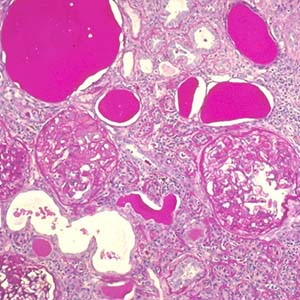
As many as 1 in 7 Americans (more than 35 million people) have chronic kidney disease (CKD), especially those with diabetes and hypertension. About 90% of them don’t feel ill and are not aware that they have CKD, according to the U.S. Centers for Disease Control and Prevention. Early stages...
Rapid, cost effective, screening for CKD/ESRD and diseases associated with CKD/ESRD using Rametrix® UMF™
Urine is the penultimate ‘liquid biopsy’, not only of the genitourinary tract, but the body as a whole. It is formed continuously, varies in composition depending on renal anatomy, physiological function, diet, state of hydration, disease processes, and the kinetics of metabolism. Normal urine contains more than 2500 distinct types...
Clinically Healthy Volunteers Database
This study of clinically healthy volunteers, with no laboratory or clinical evidence of renal dysfunction, established the database of Rametrix® UMF™ fingerprints that could be expected when obtaining urine specimens from healthy individuals and analyzed by UMF and provides the methodology for linking results with donor characteristics. (Senger, R, Sullivan,...
Stage 4/5 CKD in peritoneal dialysis (PD) patients
Periodic ‘adequacy testing’ of urine and spent dialysate is an important activity in assessing efficacy of peritoneal dialysis and detecting complication of therapy, such as membrane fibrosis and peritonitis.Rametrix® UMF™ was able to identify the type of specimen (as PD patient urine or spent dialysate) with better than 98% accuracy,...
Veterans Affairs Diabetic Nephropathy Study
Renal disease is an extremely common and serious complication of diabetes mellitus. We studied 263 urine specimens from Veterans seeking care at a Veterans Affairs Healthcare Center Nephrology Clinic. Samples were collected from patients that had kidney biopsies as part of their care and also from non-biopsied diabetic and non-diabetic...
Lyme Disease (LD) Study
Patients with LD suffer a variety of clinical symptoms, including rash (erythema migrans), headache, arthritis, fatigue, myalgia, and neurocognitive dysfunction. LD associated glomerulonephritis may occur but is considered an uncommon problem. We studied 85 urine specimens from diagnosed LD patients using UMF, specifically to see if there were urine fingerprints...
Community COVID19 Study
Infection with SARS-CoV-2 and development of COVID-19 disease is associated with a deleterious effect in renal function and structure. This was expected to potentially alter the molecular composition of urine. Since COVID-19 evolved in 2019, there have been numerous reports of acute kidney injury (AKI) associated with this infection. The...
Lupus Nephritis Study
Acute and chronic kidney disease, leading to end stage kidney disease and renal failure, can occur in 10-30% of patients with systemic lupus erythematosus, a serious autoimmune disease. Working with physicians and colleagues at the Children’s Hospital of Philadelphia, we obtained more than 400 single- and serial-collection urine samples from...
Transplantation, Tissue Engineering, Regenerative Medicine
Kidney transplantation is considered to be the preferred treatment for patients with end stage kidney disease (ESRD). However, there is a critical shortage of transplantable organs, created by the ever-increasing prevalence of CKD and ESRD. At the end of 2025, more than 102,000 patients were waiting for a transplant (https://hrsa.unos.org/data/view-data-reports/national-data/#)....
Dialysis – life-sustaining therapy for patients with end stage renal disease (ESRD)
As of March 31, 2025, there are 7,556 dialysis centers in the U.S., treating over 500,000 patients with hemodialysis or peritoneal dialysis. The breakdown of treatment methods shows that about 433,400 patients are treated in-center, 78,400 at home, and a smaller number in skilled nursing environments (https://www.matthews.com/market_insights/dialysis-centers-2025-update). Dialysis therapy sustains...